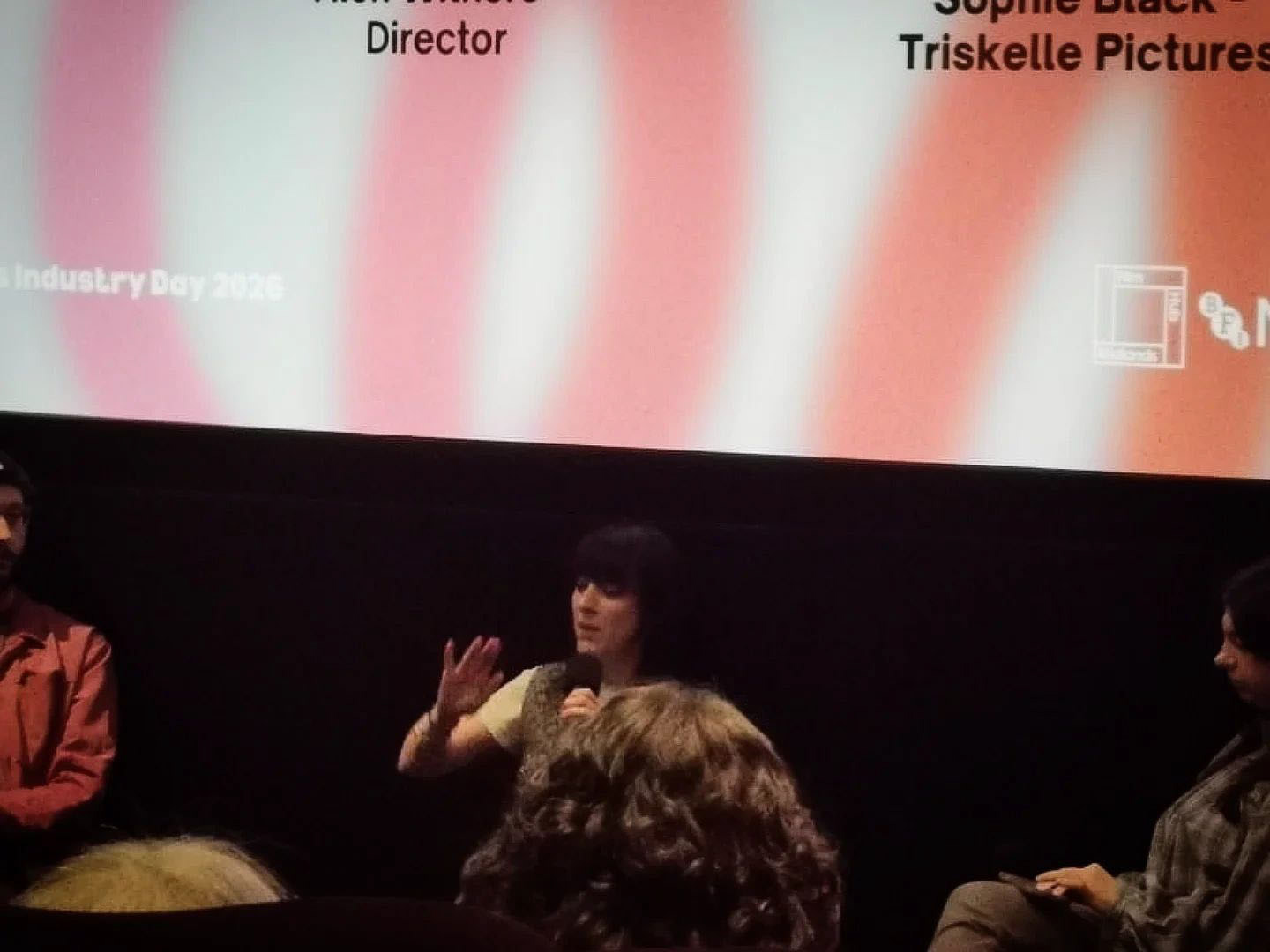
[Above: Speaking at the BFI Network Midlands Industry Day in March. Photo: Rebecca Goldsmith.]
Wow, I did not mean for this to be my first blog post since January! A lot has happened since then, and I’ll have plenty to say when I write out my usual ‘summer update’ in a couple of months’ time. What I will say is that the first quarter of 2026 has already felt so much more positive and fruitful than 2025 – possibly because of the ‘year of the fire horse’ energy that’s going round at the moment. One thing that has happened recently is that I’ve received some development funding towards my next project, so that’s been keeping me busy, and I’ll share more details about that soon.
For this blog post, I want to follow up on a great question that was asked during a BFI NETWORK panel discussion I attended in March. Myself and fellow director Alex Withers were invited down to Nottingham Broadway to talk about Sustainable Careers, as part of the BFI Film Academy Midlands Industry Day; and while we did talk about practical steps such as CV tips and where to look for work, the session turned into a beautifully heartfelt discussion of emotional sustainability, and how to remain in love with an industry that can sometimes throw you back and forth like a small ship in a big, stormy sea…
The audience was really engaged, and every question they asked was good; but the one that stuck in my head, and which I felt really deserved its own blog post to answer in full, was this:
“If you could go back and speak to your younger self, what would you tell them to do differently?”
This was something I’d actually thought about quite a lot, and so I was able to say, first and foremost, that I would’ve spent more time figuring out exactly what my individual ‘voice’ was, as a director, rather than dabbling in different genres, because I genuinely believe it would’ve gotten me to the feature stage a lot sooner.
That was what I answered on the day – but it’s not a straightforward sentiment, so I thought I’d use this platform to expand on it further.
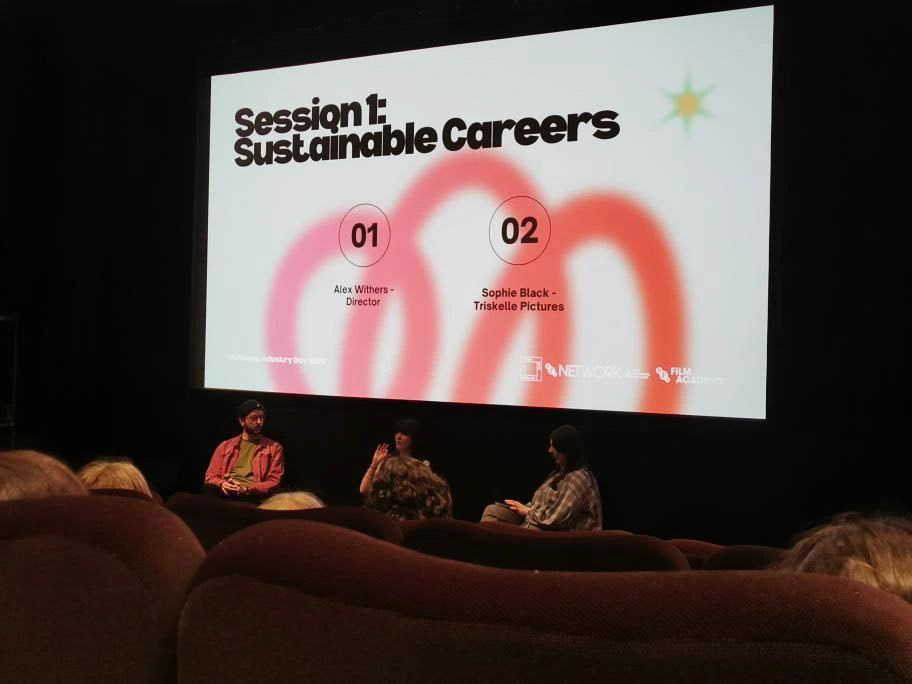
[Above: Another from the BFI Film Academy panel, with Alex Withers on the left. Photo: Rebecca Goldsmith.]
Also, don’t get me wrong, I don’t actually regret making any of my films. I’ve learned something different from each one, I’ve had great joy sharing them with audiences, and I’ve made some great, lasting connections from every crew I’ve worked with. However, when I was jumping between drama, fantasy, sci-fi, psychological horror, superhero genre, and (my favourite) magical-realism, I often took on scripts because I thought they would be fun films to make, rather than thinking strategically about my long-term goals and the film I ultimately want to make. It’s only in my most recent director’s showreel that I can proudly see a clear and consistent voice coming through. All the featured works feel like they sit within the same world, and come from the same person.
As many of you know, my long-term goal is to make Night Owls & Early Birds (the feature-length version of Night Owls); therefore, if I could go back in time, I would’ve made more films like Night Owls, and I would’ve made them again and again, until every short film on my portfolio felt like a definite proof of concept.
(Obviously none of this applies when you’re directing client-focused work, when you need to bear in mind someone else’s branding and company message, rather than forcing your own style and voice into the piece without purpose. But short films, which can be purely creative endeavours and are often made for much lower budgets, are the perfect platform with which to define your craft.)
Here’s the thing. If you give investors any reason to not invest, then you won’t get the money. You need to prove that you’re a safe set of hands and can deliver the exact thing you’re pitching. If you wanted to open a cake bakery, you wouldn’t turn up to an investor meeting with a box full of handmade pizza – even if it’s delicious and your baking skills went into making the dough. And feature films are very expensive beasts, even the ‘low budget’ ones. So as a director, you mustn’t give anyone a cause to doubt you.
If you look at the work of other directors who are making brilliant work today, there is proof in my theory. Before making her debut feature Aftersun, Charlotte Wells made Tuesday, which also told a very personal story about a girl losing her father. Before making How To Have Sex, Molly Manning Walker made Good Thanks, You?, which covered similar topics of sexual abuse. Across the short form work of both Kate Herron and Deborah Haywood, everything features a strong use of colour (I particularly love the bubble-gum, childlike but vividly feminine aesthetic of Haywood’s films) and a skilful balance of heightened humour and human drama, all of which clearly translated into Haywood’s debut feature Pin Cushion and Herron’s TV work on shows such as Sex Education and Loki. And if you go back and look at Robert Eggers’ work before (and after!) The VVitch, you will see a defined body of folkloric horror storytelling with a limited colour pallet. It’s a cliché, but consistency really is key.
You might be thinking, ‘what if I don’t want to make the same work over and over again? Will I get typecast or even bored of the work that I’m doing?’ And true, there are some directors who dabble reliably in all different genres of work whilst still proving that they are a safe set of hands that investors can trust. Steven Spielberg and Ron Howard come to mind, just to name two. But with the rise of accessible, affordable HD camera technology, there are more people making films than ever before, and more competition out there, with everyone going for the same funding pots – at a time when financial instability means that those funding pots are shrinking or disappearing altogether. There is not enough money out there for everyone. That’s the harsh reality. So at least until you’ve ‘proven yourself’ with investors, and got your feet through the door, you should consider going in with a portfolio that is confidently defined and showcases someone who really knows their strengths. Investors and audiences will all know what to expect from your work.
(And if all the films I made felt similar to my dream feature Night Owls & Early Birds, honestly I would be happy making those for the rest of my life! It is my north star, after all.)
So, with all that said… how do you define what your voice is as a director?
To begin with, when you pick up a camera for the first time, there’s nothing wrong with copying other filmmakers you like as a way of practicing techniques and getting to grips with the medium. You’ll probably discover things you like in the process. My very, very first film was a comedic (well, we thought it was funny at the time) recreation of The Fellowship of the Ring, and my university films copied a lot from the work of Baz Luhrmann and Maya Deren. But, beyond the occasional homage, you can only do this for so long. Eventually, if you’re just imitating a film style that doesn’t echo who you are as a person, the work just won’t ring true.
Instead, rather than just thinking about films you enjoy watching, take time to reflect on what makes you unique. This can be where you come from, your experiences of childhood and family, your relationships, what you care about outside of the world of film (such as hobbies), your political and moral compass, what music you listen to, what kind of characters you enjoy writing or reading about, what kind of people you love or relate to, what things you’re visually drawn to and can’t resist photographing whenever you see them… everything that makes you up as a person. Investors genuinely want authenticity and life experience, particularly those who receive public money such as The BFI, Arts Council England, etc., who have specific funding requirements.
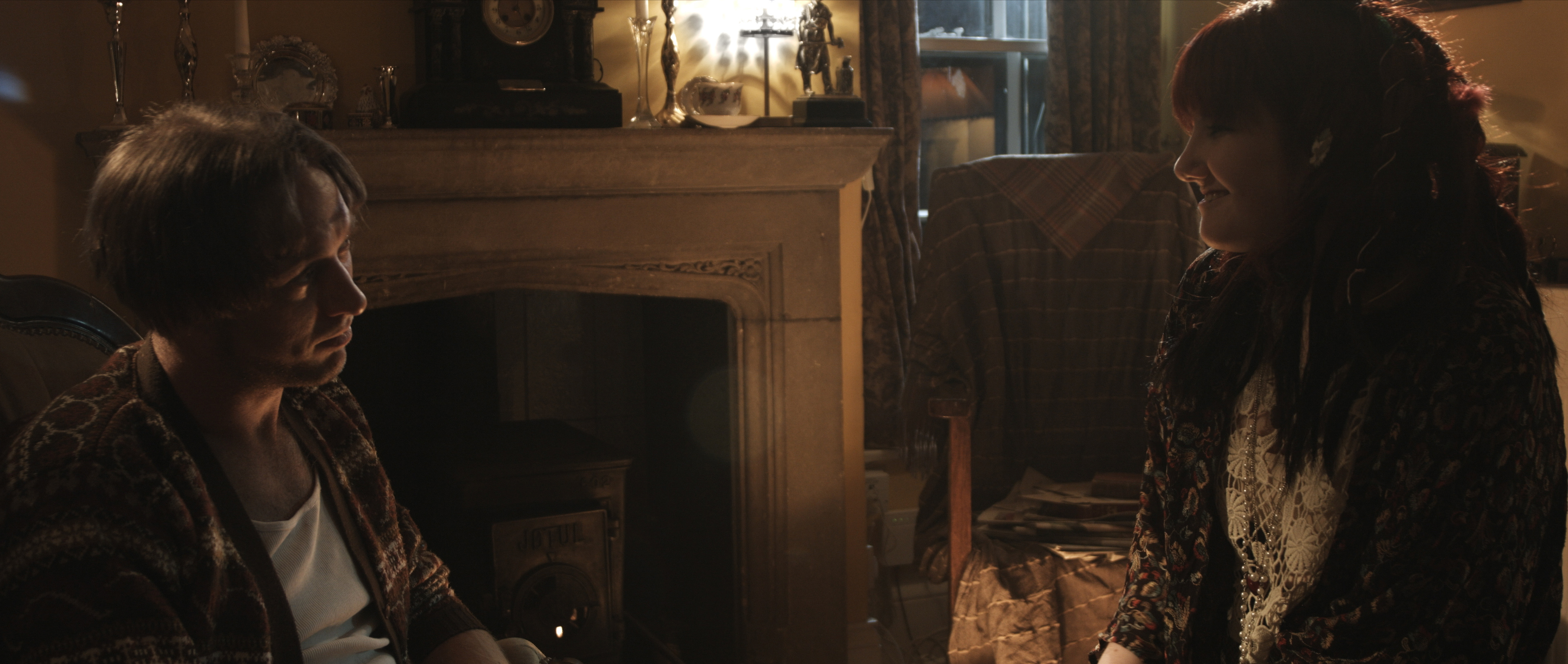
[Above: screenshot from 'Night Owls', the film which first made me realise I had a voice, even if I couldn't define it at the time! DOP: Neil Oseman.]
And if you’re still struggling to define yourself, and you’ve already got a few shorts under your belt, then why not ask other people to describe your work? Sometimes an external, objective opinion can really help. I didn’t even know I HAD a style until I made Night Owls; I'd thought I was making a straight drama (whilst opting for design and cinematography choices that I just felt suited the story), and then other people saw the film and read it as being a fairytale or a ghost story! So that made me realise I might be doing something a bit outside of the norm. Later on, another filmmaker once introduced me as, ‘Stevie Nicks, if Stevie Nicks made films’ – so of course, I put that in my website bio! As someone who's often struggled to market themselves, hearing these different responses to my work was super useful.
Once you’ve figured out what’s unique about your filmmaking style, it’s useful to distil it down into a simple pitch and memorise it. This will be very useful for networking events. Furthermore, you never know who you might run into, and how little time you’ll have to sell yourself, so a one-line ‘elevator pitch’ is vital.
When I mentor earlier-stage directors, I often give them the following sentence to fill in, as an exercise to help them figure out their voice:
I make films about [type of characters] who [where they come from, or what they do], using [filmmaking technique].
So, for example, someone might say, “I make films about ambitious people who overcome hurdles to improve their lives, using non-linear editing to reveal more about where they came from.” Or, “I make films about older people who are hung up on something from their past, using black-and-white, film noir-inspired cinematography.” Neither of these pitches are particularly groundbreaking, but you get a good idea of what you’re going to get from the work of either of these theoretical filmmakers.
And it’s fun to try and apply this sentence to other filmmakers working today. Give it a go – pick a director, someone with a distinct style like Tim Burton or Chloe Zhao, and I guarantee you’ll be able to distil their body of work, for all its nuance and variable genres, into that single sentence.
I use the one-sentence pitch to describe my work all the time, even though it took me a while to figure out what I should say! Mine is: I make films about lost souls and misfits, often in rural settings, using genre elements to visualise the inner workings of their minds. (The words change a little bit from time to time, sometimes I’ll say ‘explore’ instead of ‘visualise’, sometimes I’ll say ‘magical realism’ instead of ‘genre elements’ etc., but the gist is the same, and it’s a useful tool to have in my belt.)

[Above: Screenshot from 'Lacuna', which I wrote after I'd spent time figuring out what kind of stories I wanted to tell. DOP: Seán Mackey.]
And finally, there is one more added bonus to defining your work: it makes it so much easier to know which projects to say yes to! When you get a script, if you’re not sure if it’s right for you or not, see if it meets the ‘rules’ you’ve created for yourself. If it doesn't, and you won’t get something else worthwhile out of the experience (such as learning a new technique, working with a dream collaborator or, heck, getting a mega pay check!), then maybe you should pass.
It also helps you come up with new ideas whenever you need to. If you have a mission objective, you can scale your work to any genre and budget; you know what characters you care about, what themes and filmmaking styles you prefer to utilise, and you can adapt and apply those things to work in different scenarios. For example, when I was lucky enough to get a place on the NFTS x Prime Video Directors workshop, and I had to pitch a brand new idea to turn into a short film, I thought about ‘my kinds of characters’, combined with my visual preferences, and my mission objective to explore psychology in a positive way through genre, and that was how Lacuna was born – and I’m really, really proud of the finished result!
*
So there you go. Take time to think about who you are, everything that makes you ‘you’, and know that people will always love an authentic voice – rather than someone who’s trying to be something they’re not. You may not think you’re the most interesting person, or that your background is particularly noteworthy, but someone out there will relate to you, and they might be waiting to see just such a voice represented on screen. And then once you’ve figured out what kind of film you want to make, make it again, and again, and again, until investors have no reason to doubt that you can deliver your ‘dream feature’.
That sounds far too simple, and nothing in film is ever simple, of course – but the evidence is there. People have used this method to great success. So why not give it a try?