(KEY TAKEAWAYS FROM MY FIRST TIME AS A FESTIVAL JUDGE)
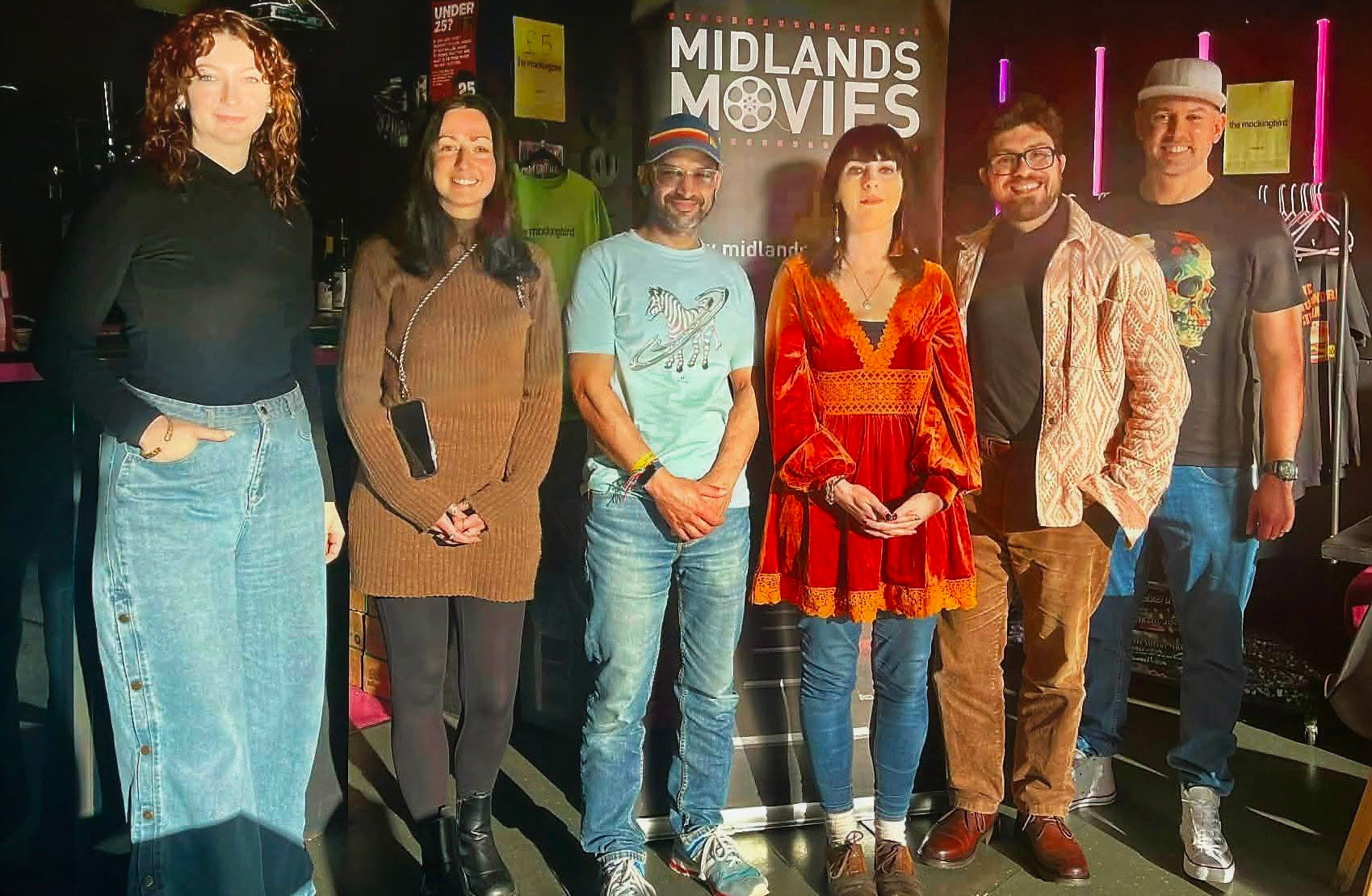
[Above: with my some of my fellow judges from the Midlands Movies Awards 2026. Photo credit: Chrome Video]
From the end of 2025 to Summer this year, I had been reviewing submissions for the 2026 Midlands Movies Awards. Midlands Movies are an organisation that celebrates local film, and they’ve always been supporters of my work over the years, so I was really touched when they asked me to be a judge this time around.
Although it was sometimes hard to juggle watching submissions around my regular workload (I mostly had to fit in watching submitted shorts on my lunch ‘breaks’!), it was a really enjoyable experience. Not only did it give me an opportunity to give back to Midlands Movies and the local film scene, but I also learned a lot about the submission process itself, and what it means to be on the opposite side of the experience. For the first time, I was the judge, rather than having my own work be judged.
And whenever I learn something new and useful, I like to share it with my followers via this blog if I can...
Filmmakers receive a lot of rejections from festivals, awards bodies, labs, and other sources. Heck, I’ve received two myself this week. It’s an unavoidable part of this cruel but brilliant creative life we’ve chosen for ourselves, and you do get used to it over time, but that doesn’t mean it doesn't suck; whenever we get rejections, we’re often left wondering if we – or our work – are not good enough. But some of the things that I learned from reviewing submissions might not only help increase your chances of getting your work selected, but it should also help you to realise that, if you do receive a rejection, that does not mean your work is necessarily bad. The reasons why a festival or awards body rejects a film aren’t always directly related to the quality of the submission.
So here are my seven key learning points from my first time as a film judge:
1) YES, IT IS BETTER TO SUBMIT EARLY
I have heard a lot of conflicting information on the subject of submission dates over the years. Some people told me that your film was more likely to be accepted if you submitted well ahead of the earliest deadline (ideally as soon as the festival opens for entries); others said that it had no impact on the judging process, it just saved you a few quid off the submission fee.
This is what I now know. While, yes, there were a few submissions that came in late and still got selected, we had such a rush of later entries that it was a real effort to get through them all in time; I watched every single qualifying entry, no matter how late they came in, and I did my best to judge them all fairly, but that last-minute stress definitely influenced my viewing experience.
Back when submissions first opened up, we only had handful of entries, so I was able to take my time watching them (and sometimes re-watching parts that caught my attention), which meant I could really digest and consider them properly. Straight away after watching those early entries, I was already thinking of films I'd like to put forward for an award, and they were fairly cemented in my mind way before the final entries landed on my 'to watch' list, months later.
2) CAREFULLY READ THE RULES OF THE PLACE YOU'RE SUBMITTING TO!
Now look, I appreciate a 'give it a go and see what happens' attitude as much as the next filmmaker. It's the only way some of us would ever get our work noticed at the bigger festivals. However, if a festival categorically cannot accept your film, due to its clearly advertised selection rules, you are just wasting your money by submitting.
As a judge at Midlands Movies, I had certain categories within which to consider the entries. These categories directly related to the awards that would be handed out on the night of the ceremony. And there were a couple of times when I was watching entries and wrote down, "I really enjoyed this film - but it doesn't fit into any of our criteria." These were good films that I therefore had to reject!
On the more extreme side: Midlands Movies is an awards competition specifically for films which were shot in the Midlands. It plainly states this in the rules when you submit on FilmFreeway. And yet, we had films submitted which weren't even shot in the UK! Again, whether or not these films were good was not the point - they were instantly disqualified.
3) BE CLEAR ON WHOSE STORY YOU'RE TELLING
On a similar note to my above point: as judges, when we were watching the entries, we were considering performances under the clear-cut categories of Lead Actor, Lead Actress, Supporting Actor, and Supporting Actress. There were some films which had great performances, but were ensemble pieces without any form of defined acting hierarchy; I remember emailing our head judge and saying, "I want to nominate the acting in this film, but I don't know if this person was the lead or not!"
Similarly (and I have been guilty of this mistake as a filmmaker myself), if your character's name isn't mentioned once in the film, and it also isn't clear in the credits which actor played which role, you are making it hard for judges to nominate your film for an acting award, even if your actor really deserves it. (Note: I did search the internet and IMDb a few times to figure out which actors played which roles, but even that proved inconclusive sometimes.)
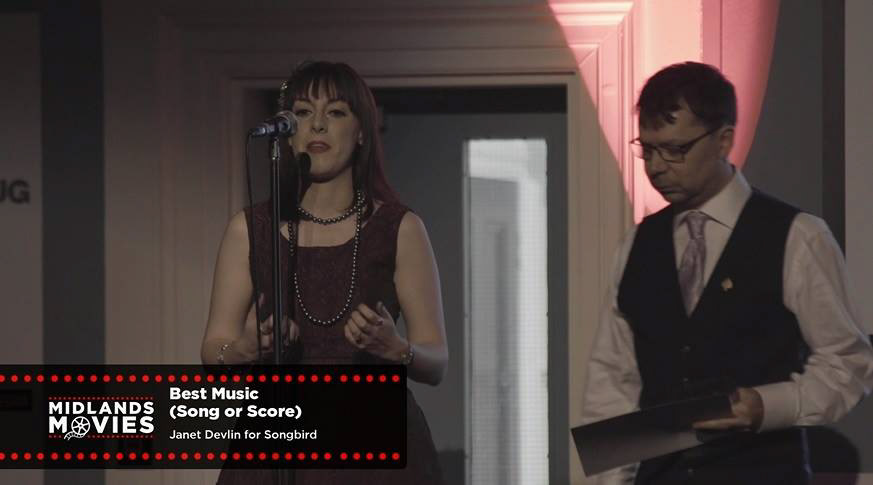
[Above: a little throwback to myself and Tommy Draper collecting Janet Devlin's award for Songbird - one of the many times Midlands Movies have kindly acknowledged our films.]
4) DIALOGUE IS THE MOST IMPORTANT SOUND IN YOUR FILM
It took me a long time to select my shortlist in the Sound category - and that's not because there wasn't talented sound design on show in the entries. A lot of the films had genuinely wonderful foley and an exciting use of sound editing in things like action scenes. Really impressive, inspired, creative work... but then the dialogue was so quiet in the mix that I had to really turn up my speakers or put on subtitles to follow what was being said. On a couple of occasions, the dialogue sounded like it was recorded on a boom microphone that was nowhere near the actors, resulting in distractingly echoey audio - even though the rest of the SFX, clearly added during post-production, was very polished.
If the way your dialogue was recorded is stopping the audience from connecting to the characters and their story, honestly the rest of your work doesn't matter, brilliant as it might be. So it's always worth taking the time to capture this right on set, or if you can't do that, then use ADR.
5) SHORT FILMS SHOULD BE SHORT!
Picture the scene. Myself and my fellow judges are ploughing through the sudden, last-minute windfall of later submissions; we're all juggling other work alongside this, often trying to watch as many entries as possible in the brief windows we have available... and then the next submitted short on our watchlist is 20, 30, maybe even 40+ minutes long...
I may have sworn on a few occasions when that happened, and while I tried to not let that frustration cloud my judgement, I couldn't help but feel delighted when the occasional 5 minute (or less!) short appeared on my list, knowing that I could easily watch through at least four of those in a limited time slot, such as an aforementioned lunch break.
Unlike Midlands Movies (which is an awards show, so it doesn't need to worry about the timing of public screenings and things like that), most festivals don't accept short films which are over 15 minutes long. Some even cap the run time at 10 minutes. Therefore, there were times when I was watching great, submitted films that were 20+ minutes long and actually feeling sad that they might not reach as many audiences as a shorter film would. And with the films that were 45-50 minutes long, I found myself wondering if there had been some way the filmmakers could've raised a bit more money and carried on filming to capture just another 30 minutes worth of footage, in order to qualify as an indie feature and have a lot more of a shelf life as a result. Sometimes, these kind of micro features have launched the career of a filmmaker, whereas a near-feature-length short film might never even make it into festivals.
(Ok, mini rant over - I just always want filmmakers to do well! I am rooting for us all, and I get frustrated when people create barriers for themselves that could easily be avoided, when they clearly deserve success.)
6) DON'T FORGET TO HAVE AN ENDING
It is common for short films to be made as a proof-of-concept for a feature. Many filmmakers, myself included, have taken a segment from an intended feature film and turned it into a short, capturing the characters and vibe of a much larger film. However, that doesn't mean your short film shouldn't work as a standalone piece; if you're just shooting a small part of a feature film, such as the opening segment, and you leave the story unfinished, it doesn't always leave the audience wanting more - it can actually make them feel frustrated.
There were a few Midlands Movies entries I watched which seemed really good - either because they started strong, or took a while to get going but had a fantastic build - but then they suddenly ended. No conclusion, just a cut to black or credits. These were films which I would've rated really highly, but ultimately I just wanted to shout at the screen, "is that it?!" An ambiguous ending can seem like a cool and edgy option, but it takes a lot of work and skill to master that kind of ending, and most of the time it just gives off the impression that the screenwriter ran out of ideas and didn't know how to finish their film. It's much safer to add a clear and satisfying conclusion.
And finally... 7) JUDGING CAN SOMETIMES BE A MATTER OF PERSONAL OPINION!
While there can be hard and fast rules that determine the quality of a film (e.g. professionally-captured dialogue), people tend to forget that film, like all art forms, can be influenced by personal taste. Just because a film is considered a masterpiece, rated 5 stars by critics, and given the top prize at the Oscars, doesn't mean everyone will personally enjoy it when they watch it in the cinema. And judges are only human!
Don't get me wrong, every film that was nominated for a Midlands Movies Award deserved to be on the shortlist. I'm not saying that they didn't. But that doesn't mean the judges loved all the films equally. There were films I personally ranked really highly that didn't make the shortlist, and on the flip side, there were others that didn't quite resonate with me but still went on to scoop top prizes. It was genuinely fascinating to see how everyone's choices varied, versus how we were all in agreement regarding certain entries.
Art is meant to divide people, and it's ok to enjoy different things, otherwise life would get quite boring and predictable! But my experience as a judge did make me think; whenever my films were rejected by festivals in the past, maybe there were some judges that loved them, and just didn't get the majority vote; maybe, with a different judging line-up, or if I'd submitted in a different year, the films would've been seen by people who would've selected them. Or maybe the result would've always been the same. There's no way of knowing for sure - but, as with all of this blog post, I hope my musing has helped you, my reader, to feel reassured that there is always someone out there who will enjoy your work, and most rejections do not simply mean that you made a bad film.
_
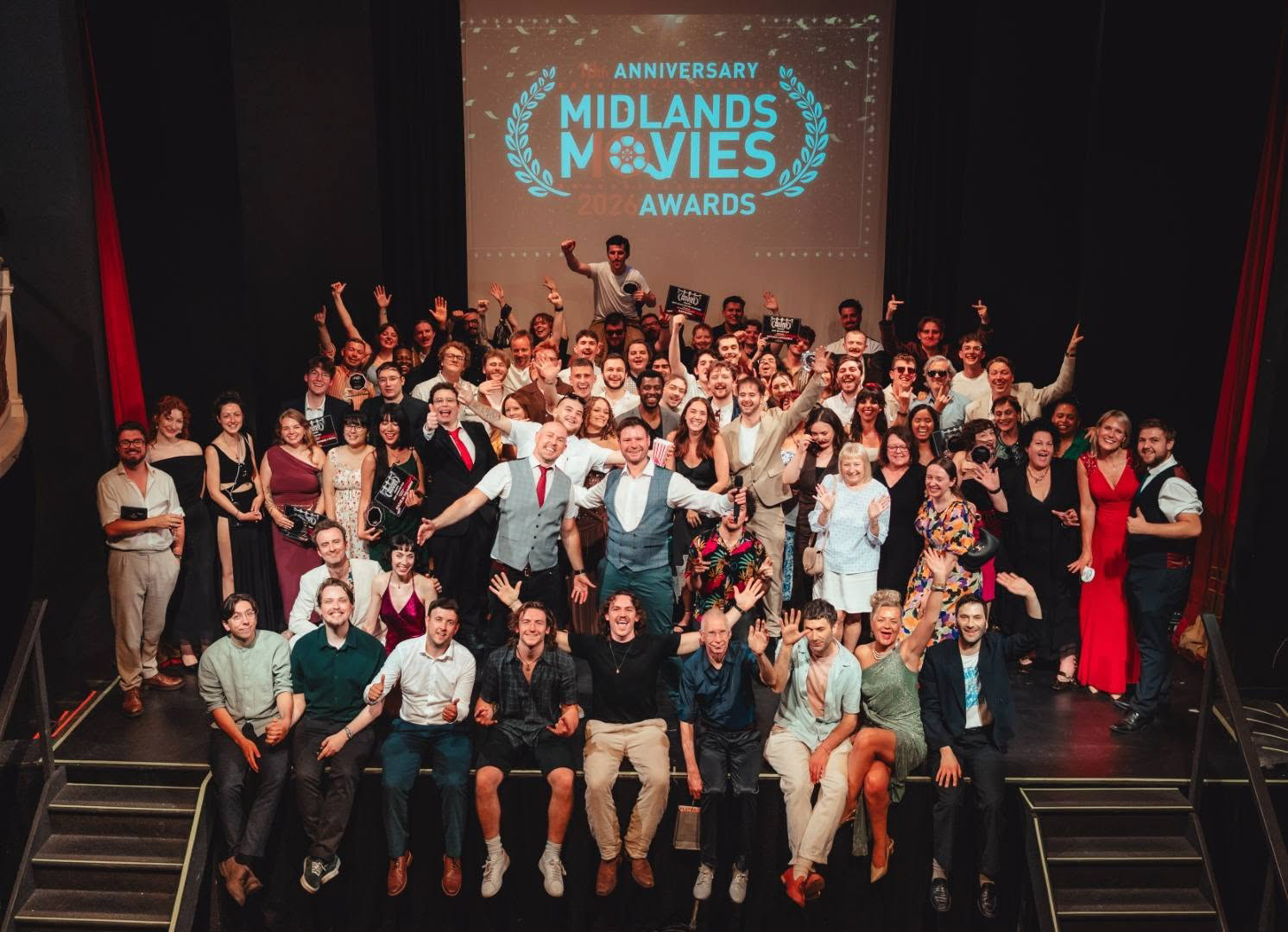
[Above: the winners, audience, and judges at the 2026 Midlands Movies Awards ceremony. Photo credit: Poyner & Mee Photography.]
So those are my top learning points from my first time as a film judge, and I hope you've found something useful from reading them.
Although I was sadly unable to attend the Midlands Movies Awards ceremony this year, I really enjoyed and learned a lot from my time as a judge, and I am still so touched that Mike Sales and the team invited me to take part. Midlands Movies are really worth supporting, as an organisation that champions local talent and acknowledges raw, up-and-coming filmmakers as well as those who are more established. This year also marked their tenth anniversary! So all of that should encourage you to follow them on social media, send them your film to review or, if you've shot a film in the Midlands, consider submitting it to the next awards.
_
P.s. Thank you for reading to the end! If you like my blog posts then please consider donating to the funding campaign for my team's next short film, Tokos. The campaign starts next month, and we've just unveiled this cool teaser poster (copies of which will be one of the rewards our backers can pledge for), so keep an eye on the Triskelle Pictures and Hipster Films social pages to be the first to know when the campaign goes live.